Food Supply
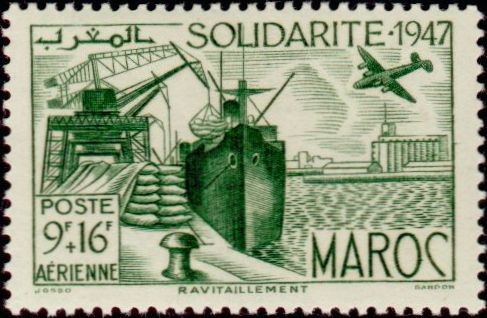
The aftermath of World War II left North Africa grappling with severe economic disruptions, inflation, and acute shortages of basic necessities, fuel, and food. In response to these widespread hardships, the administrative authorities in Morocco orchestrated extensive nationwide supply and provisioning operations (ravitaillement) to regulate distribution, manage shortages, and secure essential imports for the domestic population. Concurrently, the post-war period saw a major mobilization of state-directed social solidarity campaigns, which aimed to raise critical welfare and relief funds to alleviate poverty, combat local food insecurity, and support vulnerable communities, war orphans, and families recovering from the economic strains of the global conflict.
This era of reconstruction also catalyzed a massive technological and industrial modernization of Morocco's logistics infrastructure, transforming major coastal hubs like the port of Casablanca into critical engines of international trade. These deep-water ports were heavily upgraded with modern mechanical equipment, heavy-duty cargo cranes, and large-capacity grain silos to handle the massive volumes of incoming humanitarian aid, imported provisions, and exported raw materials. Crucially, the post-war period marked the seamless integration of these expanding maritime shipping operations with newly established commercial cargo aviation networks, accelerating the recovery of the regional economy and positioning mid-century Morocco as a vital transcontinental logistical bridge between Europe and Africa.
This era of reconstruction also catalyzed a massive technological and industrial modernization of Morocco's logistics infrastructure, transforming major coastal hubs like the port of Casablanca into critical engines of international trade. These deep-water ports were heavily upgraded with modern mechanical equipment, heavy-duty cargo cranes, and large-capacity grain silos to handle the massive volumes of incoming humanitarian aid, imported provisions, and exported raw materials. Crucially, the post-war period marked the seamless integration of these expanding maritime shipping operations with newly established commercial cargo aviation networks, accelerating the recovery of the regional economy and positioning mid-century Morocco as a vital transcontinental logistical bridge between Europe and Africa.