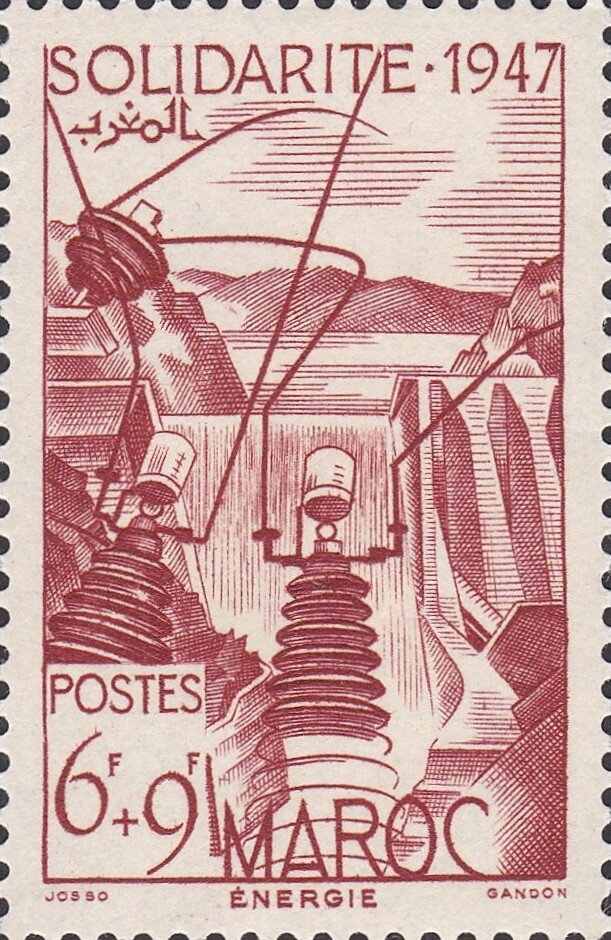
Energy- Electricity
The post-World War II period in Morocco was marked by a massive emphasis on state-directed industrialization, infrastructure modernization, and the expansion of the territory's electrical grid. To support the rapid urbanization of coastal hubs like Casablanca and the booming extraction industries in the interior, the administrative authorities initiated major engineering projects focused heavily on hydroelectric power generation. The construction of massive dams and modern generating stations throughout the Atlas mountain valleys served as the backbone of this post-war economic plan, aiming to secure energy independence, fuel industrial manufacturing, and provide a reliable, modern power supply across the country.
Concurrently, the year 1947 represented a major milestone in state-organized social development through comprehensive nationwide winter solidarity campaigns. The funding generated from these public welfare initiatives was directly channeled into critical social infrastructure and public works projects, helping to bridge the gap between economic modernization and community relief. By framing these major industrial and energy achievements (énergie) as central pillars of national resilience, the post-war administration highlighted its ambitious dual commitment to high-tech heavy engineering and social stabilization during a transformative era of mid-century reconstruction.
Concurrently, the year 1947 marked a peak in state-organized social welfare mobilization through comprehensive nationwide solidarity campaigns. The funds raised during these winter initiatives were directly funneled into rural relief projects, providing essential aid to impoverished farming communities and funding public works in the agricultural interior. This period also witnessed the increasing integration of modern transport networks with rural development, as post-war aviation and upgraded logistical corridors were leveraged to accelerate the distribution of vital resources, bridging the gap between isolated agricultural zones and major urban centers to foster nationwide economic resilience.
Concurrently, the year 1947 represented a major milestone in state-organized social development through comprehensive nationwide winter solidarity campaigns. The funding generated from these public welfare initiatives was directly channeled into critical social infrastructure and public works projects, helping to bridge the gap between economic modernization and community relief. By framing these major industrial and energy achievements (énergie) as central pillars of national resilience, the post-war administration highlighted its ambitious dual commitment to high-tech heavy engineering and social stabilization during a transformative era of mid-century reconstruction.
Concurrently, the year 1947 marked a peak in state-organized social welfare mobilization through comprehensive nationwide solidarity campaigns. The funds raised during these winter initiatives were directly funneled into rural relief projects, providing essential aid to impoverished farming communities and funding public works in the agricultural interior. This period also witnessed the increasing integration of modern transport networks with rural development, as post-war aviation and upgraded logistical corridors were leveraged to accelerate the distribution of vital resources, bridging the gap between isolated agricultural zones and major urban centers to foster nationwide economic resilience.