Health
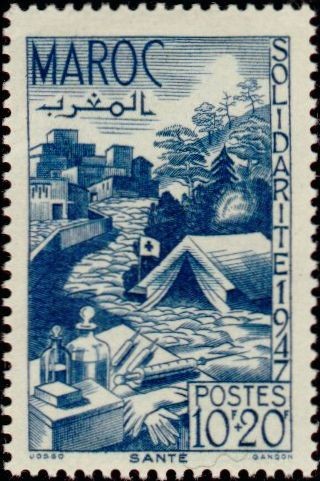
The aftermath of World War II in Morocco was severely compounded by critical public health crises, as devastating droughts and food shortages in the mid-1940s left large segments of the population vulnerable to widespread epidemics. Diseases such as typhus, tuberculosis, and malaria threatened both dense urban medinas and isolated rural communities. In response, the administrative authorities launched aggressive public health (santé) and sanitation campaigns aimed at modernizing the territory's medical infrastructure. These state-directed initiatives focused heavily on dispatching mobile medical units, establishing field dispensaries, implementing sweeping vaccination drives, and distributing vital pharmaceuticals to combat the spread of contagion and reduce mortality rates across the region.
Concurrently, the year 1947 marked a pivotal mobilization of social welfare through the nationwide winter solidarity campaigns. The funding raised during these initiatives was directly channeled into constructing permanent clinics, expanding rural healthcare access, and supporting humanitarian organizations providing frontline emergency relief. By integrating these critical medical expansion programs with broader social welfare strategies, the post-war administration sought to stabilize the country's social fabric, leveraging healthcare as a foundational pillar of national recovery and long-term socioeconomic development during a challenging era of mid-century reconstruction.
Concurrently, the year 1947 marked a pivotal mobilization of social welfare through the nationwide winter solidarity campaigns. The funding raised during these initiatives was directly channeled into constructing permanent clinics, expanding rural healthcare access, and supporting humanitarian organizations providing frontline emergency relief. By integrating these critical medical expansion programs with broader social welfare strategies, the post-war administration sought to stabilize the country's social fabric, leveraging healthcare as a foundational pillar of national recovery and long-term socioeconomic development during a challenging era of mid-century reconstruction.