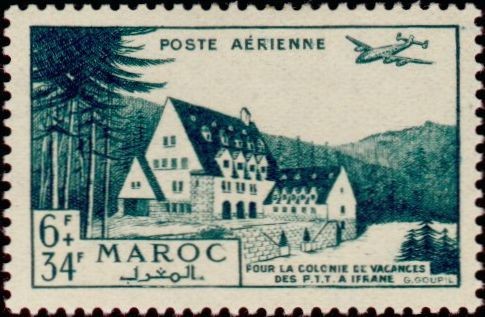
Postal Workers Home - 40 franc
The mountain town of Ifrane, nestled high in the Middle Atlas region, experienced a notable expansion during the mid-twentieth century as a unique administrative and recreational sanctuary. Developed initially in the late 1920s and 1930s as an alpine-style "hill station," the town was intentionally engineered to provide a cool, temperate refuge from the blistering summer heat of Morocco's coastal plains and interior imperial cities. Characterized by its dense cedar forests, stone architecture, and European-inspired chalets, this specialized urban center became an increasingly vital hub for seasonal transit, environmental tourism, and state-subsidized health retreats during the post-World War II era.
Concurrently, the late 1940s marked a major institutional shift toward expanding social welfare systems and public health initiatives for civil servants across the territory. The Postes, Télégraphes et Téléphones (P.T.T.) administration, functioning as a critical logistical backbone of mid-century communication, stood at the forefront of these labor solidarity programs. The establishment of dedicated summer vacation colonies (colonies de vacances) in Ifrane for postal workers and their families reflected a broader state-directed effort to improve living standards, reward public sector employees, and promote physical well-being. These social infrastructure projects underscored a transformative era of reconstruction where organized communal leisure and corporate welfare were directly leveraged to foster administrative stability within vital public service sectors.
Concurrently, the late 1940s marked a major institutional shift toward expanding social welfare systems and public health initiatives for civil servants across the territory. The Postes, Télégraphes et Téléphones (P.T.T.) administration, functioning as a critical logistical backbone of mid-century communication, stood at the forefront of these labor solidarity programs. The establishment of dedicated summer vacation colonies (colonies de vacances) in Ifrane for postal workers and their families reflected a broader state-directed effort to improve living standards, reward public sector employees, and promote physical well-being. These social infrastructure projects underscored a transformative era of reconstruction where organized communal leisure and corporate welfare were directly leveraged to foster administrative stability within vital public service sectors.