Ceramics
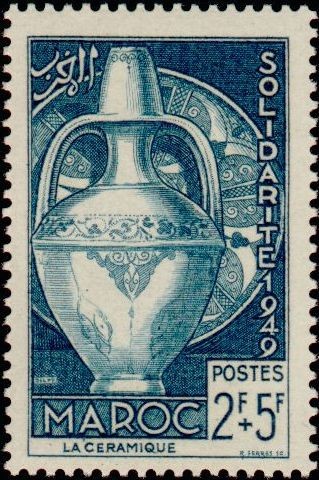
The year 1949 marked a continued mobilization of state-directed social welfare programs in Morocco through the organization of the annual winter solidarity campaigns (Solidarité 1949). Operating within the complex economic climate of the post-World War II era, these initiatives sought to raise vital funds for public relief, healthcare, and poverty alleviation across the territory. Concurrently, administrative authorities increasingly paired these charitable drives with broad economic preservation programs aimed at reviving and safeguarding Morocco's rich artisanal heritage. By spotlighting traditional trades, the post-war administration aimed to stimulate domestic markets, encourage cooperative labor models, and generate sustainable revenue streams for vulnerable populations heavily impacted by mid-century economic instability.
Central to this economic strategy was the promotion and structured development of the traditional Moroccan pottery and ceramics sector (La Céramique). Deeply rooted in historic imperial cities like Fes and Safi, the handicraft industry served as a vital socioeconomic lifeblood, supporting ancestral guilds and master potters. During the late 1940s, regional programs focused on standardizing production quality, preserving authentic cobalt blue glazes and complex geometric motifs, and expanding export avenues to capitalize on growing international appreciation for North African art. By channeling solidarity funds and administrative support into these artisan networks, the mid-century administration sought to foster local self-sufficiency, bridging the gap between social welfare assistance and long-term economic development within the territory's traditional craft sectors.
Central to this economic strategy was the promotion and structured development of the traditional Moroccan pottery and ceramics sector (La Céramique). Deeply rooted in historic imperial cities like Fes and Safi, the handicraft industry served as a vital socioeconomic lifeblood, supporting ancestral guilds and master potters. During the late 1940s, regional programs focused on standardizing production quality, preserving authentic cobalt blue glazes and complex geometric motifs, and expanding export avenues to capitalize on growing international appreciation for North African art. By channeling solidarity funds and administrative support into these artisan networks, the mid-century administration sought to foster local self-sufficiency, bridging the gap between social welfare assistance and long-term economic development within the territory's traditional craft sectors.